


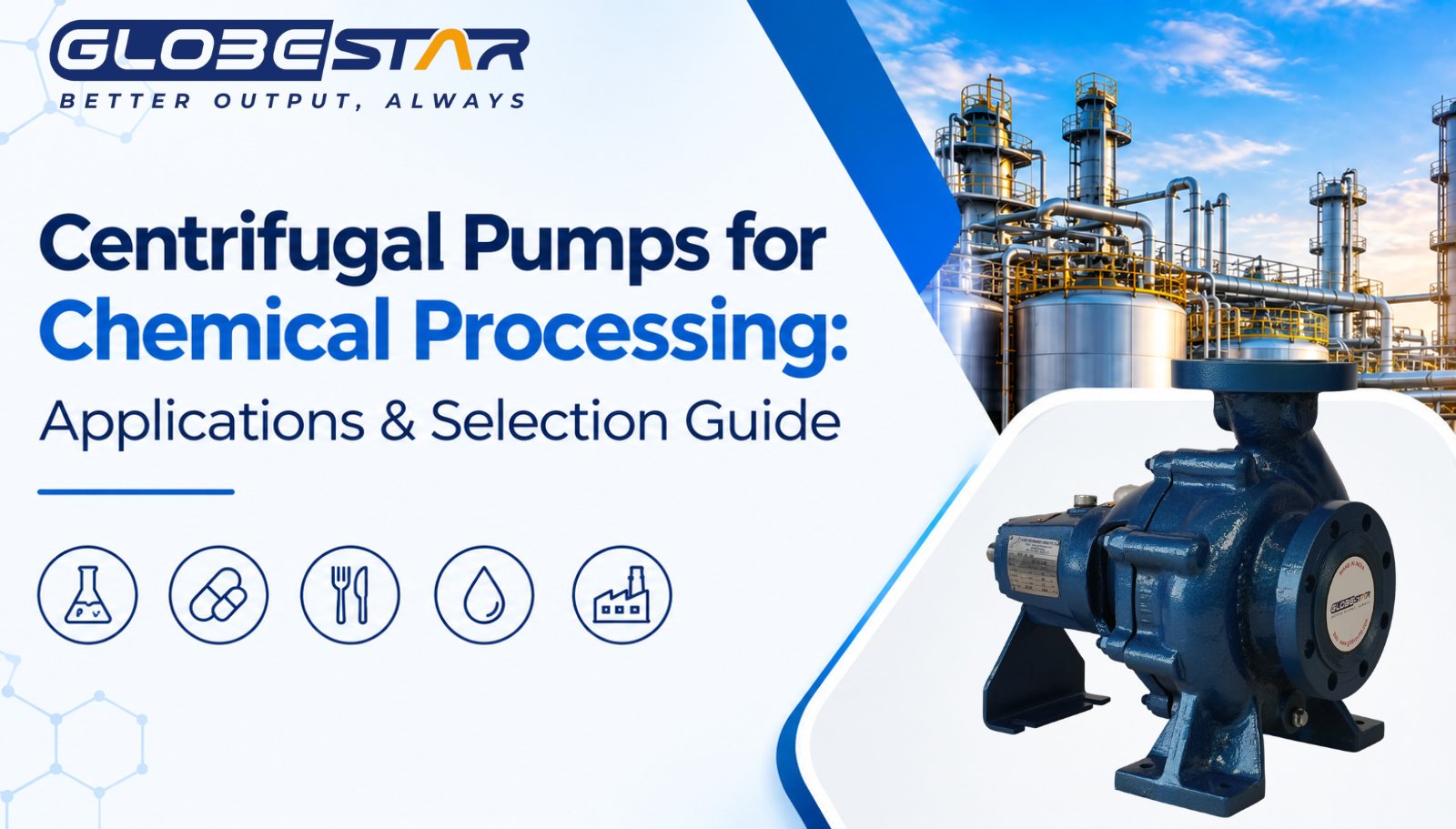
Centrifugal Pumps for Chemical Processing: Applications, Selection & Material Guide
Chemical processing plants require dependable pumping equipment for transferring, circulating, and handling a wide range of industrial liquids. From chemical storage and transfer to process circulation and effluent handling, pumps play an important role in maintaining continuous plant operations.
A centrifugal process pump can be an effective solution for many industrial liquid-handling applications when it is correctly selected according to flow, head, liquid properties, temperature, material compatibility, and operating conditions.
This guide explains the major factors to consider when selecting a centrifugal pump for chemical processing applications and highlights the importance of application-specific pump selection.
Why Pump Selection Matters in Chemical Processing
Chemical liquids can vary significantly in their physical and chemical properties. A pump suitable for one process liquid may not be appropriate for another liquid with a different concentration, temperature, viscosity, or corrosive nature.
An unsuitable pump selection may result in:
- Premature mechanical seal failure
- Corrosion of wetted components
- Reduced pump performance
- Excessive maintenance
- Leakage and process interruptions
- Higher operating costs
- Reduced equipment service life
For this reason, chemical process pump selection should begin with a clear understanding of the liquid and the operating conditions.
Major Applications of Centrifugal Pumps in Chemical Industries
Centrifugal pumps are commonly used for industrial liquid-transfer and circulation duties. Depending on the pump construction and application requirements, typical applications include:
- Chemical transfer between storage tanks
- Transfer of process liquids
- Raw material and intermediate fluid transfer
- Chemical circulation systems
- Cooling and process circulation
- Tank filling and unloading operations
- Industrial wastewater and effluent handling
- Process utility systems
- Transfer of compatible corrosive liquids
- General liquid circulation within manufacturing plants
The exact pump construction should always be determined by evaluating the specific process conditions.
Important Factors Before Selecting a Chemical Process Pump
Selecting a pump based only on flow rate and head can lead to an unsuitable solution. Several additional parameters should be evaluated before finalizing the pump.
1. Flow Rate
The required flow rate determines how much liquid the pump needs to transfer within a specific period. Flow should normally be specified in units such as m³/hr, LPM, or L/s. The expected operating flow range should also be considered if the system does not operate at a constant flow.
2. Total Head
Total head represents the pressure requirement that the pump must overcome while transferring the liquid through the system.
The calculation may include:
- Static head
- Pipeline friction losses
- Valve and fitting losses
- Equipment pressure
- Required discharge pressure
Accurate head information helps prevent incorrect pump sizing.
3. Liquid Properties
The characteristics of the liquid have a direct impact on pump selection. Important information includes:
- Chemical name
- Concentration
- Specific gravity
- Viscosity
- Temperature
- Corrosive properties
- Suspended solids
- Crystallization tendency, if applicable
Providing accurate liquid information allows the pump construction and materials to be evaluated properly.
4. Operating Temperature
Temperature can significantly affect material compatibility, mechanical seals, and other pump components. The pump should therefore be selected according to the actual operating temperature rather than assuming that the liquid will always be handled at ambient conditions.
5. Suction Conditions
Adequate suction conditions are important for stable centrifugal pump operation. The available NPSH and required NPSH should be evaluated to reduce the possibility of cavitation.
Poor suction conditions may result in:
- Noise and vibration
- Reduced pump performance
- Damage to hydraulic components
- Shorter equipment life
Material Selection for Chemical Process Pumps
Material selection is one of the most important considerations when handling chemicals. The wetted parts of the pump should be compatible with the liquid being handled. Depending on the application, different construction materials may be considered.
Material selection can depend on:
- Chemical concentration
- Liquid temperature
- Corrosion characteristics
- Operating pressure
- Required service life
- Presence of abrasive particles
Using an unsuitable material can lead to corrosion, deterioration, and premature component failure.
Mechanical Seal Selection
The mechanical seal is another critical component in a chemical pumping system. Seal selection should consider:
- Chemical compatibility
- Operating temperature
- Pressure
- Shaft speed
- Liquid characteristics
- Expected operating conditions
An appropriate seal arrangement can help reduce leakage and improve pump reliability.
Centrifugal Process Pumps for Industrial Applications
GLOBE STAR ENGINEERS INDIA PVT. LTD. – GLOBE PUMP provides industrial pumping solutions for process and fluid-transfer applications.
Our centrifugal process pumps are suitable for evaluating a wide range of industrial pumping requirements where reliable liquid transfer and circulation are required.
Application-based pump selection can be considered using:
- Required flow
- Required head
- Liquid characteristics
- Operating temperature
- Construction material
- Mechanical seal requirements
- Motor power
- Installation conditions
- Process operating requirements
The final pump configuration should always be selected after reviewing the complete application details.
Common Mistakes in Chemical Pump Selection
Incorrect pump selection can affect both performance and maintenance costs. Some common mistakes include:
Selecting a Pump Only by Flow and Head
Flow and head are essential parameters, but they do not provide the complete picture. Liquid properties, temperature, materials, and sealing requirements must also be evaluated.
Ignoring Chemical Concentration
The same chemical at different concentrations can have different compatibility requirements. Concentration should therefore be included in the pump selection data.
Choosing the Wrong Material
A material that performs well in one application may not be suitable for another chemical. Material compatibility should be checked before finalizing the pump.
Overlooking Temperature
Pump components and seals can behave differently at elevated temperatures. Actual operating temperature should always be considered.
Selecting an Incorrect Mechanical Seal
A seal that is not compatible with the process liquid may result in leakage and premature failure.
Oversizing the Pump
An excessively oversized pump can operate away from its intended operating range and may result in inefficient operation and unnecessary energy consumption.
Ignoring Suction Conditions
Insufficient suction conditions can contribute to cavitation and unstable pump operation.
How to Select the Right Centrifugal Pump
A systematic approach can make pump selection more accurate and reliable. Before contacting a pump manufacturer, prepare the following information:
Liquid Details
- Liquid name
- Chemical concentration
- Specific gravity
- Viscosity
- Temperature
- Solid content, if any
Pump Requirements
- Required flow rate
- Required head
- Discharge pressure
- Suction condition
- Operating hours
- Continuous or intermittent operation
Installation Details
- Suction pipe size
- Discharge pipe size
- Approximate pipeline length
- Tank or vessel details
- Installation arrangement
Providing complete technical information helps the pump manufacturer evaluate the application and recommend an appropriate pump configuration.
Why Application-Based Pump Selection Is Important
Every industrial pumping application has its own operating conditions. Two systems may require the same flow rate but still need different pump configurations because of differences in liquid properties, temperature, pressure, or installation conditions.
Application-based selection helps address:
- Hydraulic performance
- Material compatibility
- Mechanical seal requirements
- Motor sizing
- Operating reliability
- Maintenance requirements
- Expected service conditions
This approach is particularly important for chemical and process industries where liquid properties can vary considerably.
Industrial Pump Solutions from GLOBE PUMP
GLOBE STAR ENGINEERS INDIA PVT. LTD. – GLOBE PUMP is an industrial pump manufacturer offering pumping solutions for a range of industrial applications.
Our product range includes:
- Centrifugal Process Pumps
- AODD Pumps
- Chemical Process Pumps
- PP Centrifugal Pumps
- Sewage Pumps
- Industrial Mud Pumps
- Dewatering Pumps
- Fire Fighting Pumps & Systems
For a centrifugal process pump requirement, customers can share their application details with our technical team for evaluation and pump selection.
Conclusion
Centrifugal pumps are widely used for liquid transfer and circulation across chemical and process industries. However, dependable pump performance depends on selecting the equipment according to the actual process requirements.
Flow, head, liquid properties, concentration, temperature, material compatibility, mechanical seal selection, and suction conditions should all be considered before finalizing a pump.
Choosing the right pump configuration can help improve operating reliability, reduce maintenance issues, and support consistent industrial process performance.
GLOBE STAR ENGINEERS INDIA PVT. LTD. – GLOBE PUMP provides industrial centrifugal pumping solutions based on application requirements.
Looking for a centrifugal process pump for your industrial application? Share the liquid details, flow rate, head, temperature, and operating conditions with GLOBE PUMP for suitable pump selection assistance.
Frequently Asked Questions
What is a centrifugal process pump?
A centrifugal process pump uses an impeller to transfer liquid and generate the required flow and pressure. It is widely used in industrial process and liquid-transfer applications.
Can centrifugal pumps be used for chemical applications?
Yes. Centrifugal pumps can be used for many chemical applications when the pump construction, materials, seals, and operating parameters are suitable for the specific liquid.
What information is required to select a chemical process pump?
Important information includes liquid name, concentration, flow rate, head, temperature, specific gravity, viscosity, suction conditions, and operating requirements.
Why is material compatibility important?
The pump's wetted components come into contact with the pumped liquid. Incorrect material selection can cause corrosion, deterioration, or premature component failure.
Why is mechanical seal selection important?
The mechanical seal helps prevent leakage around the rotating shaft. Its material and design should be compatible with the liquid, temperature, and pressure of the application.
What causes problems in centrifugal chemical pumps?
Common causes include incorrect pump sizing, incompatible materials, unsuitable seals, inadequate suction conditions, improper operation, and insufficient maintenance.
How can I get the right centrifugal pump for my application?
Provide the pump manufacturer with the liquid details, required flow, head, temperature, concentration, and other available process information. These details can be used to evaluate the appropriate pump configuration.