


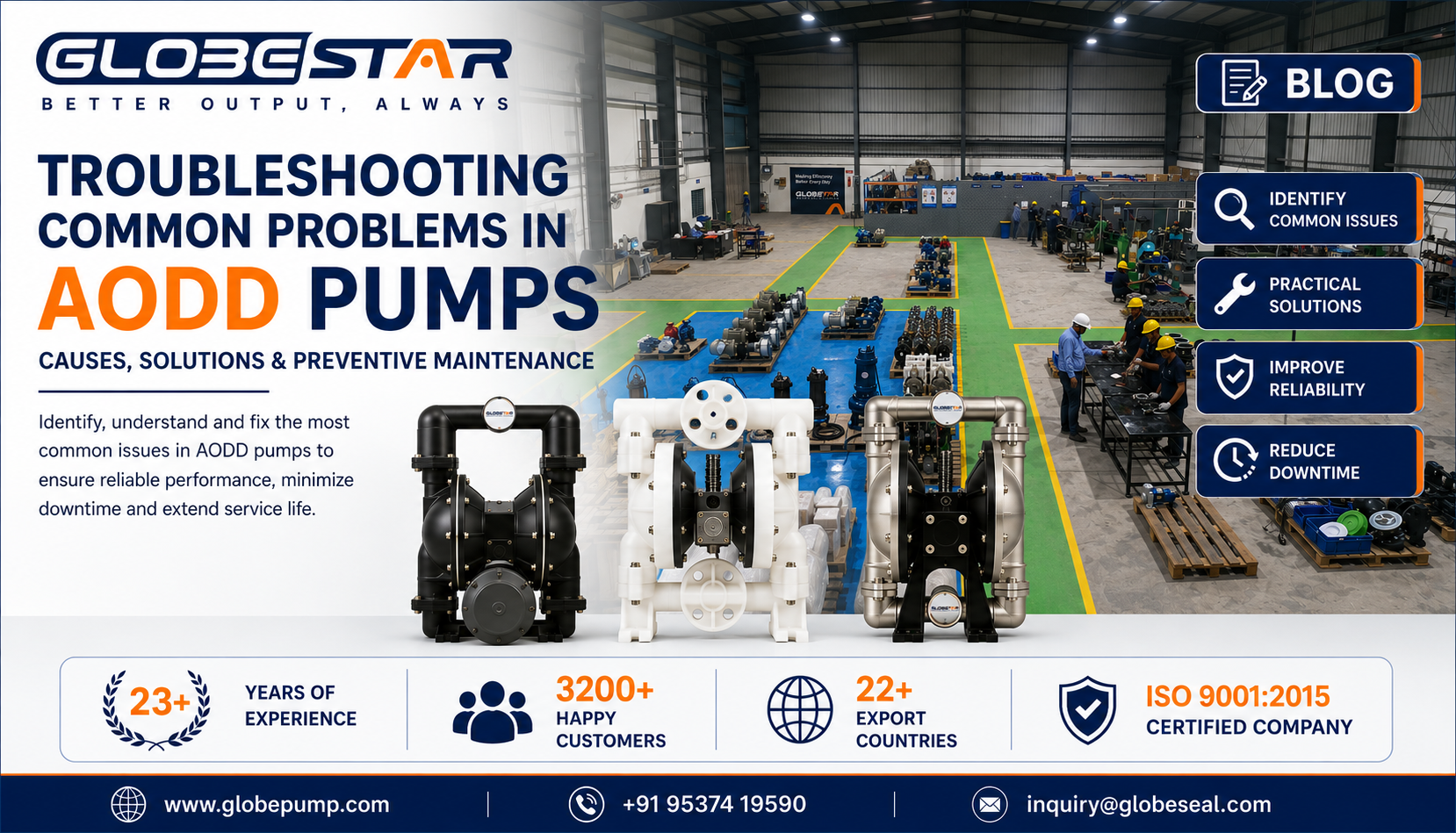
Troubleshooting Common Problems in AODD Pumps
Introduction
Air Operated Double Diaphragm (AODD) pumps are widely used across industries due to their versatility, self-priming capability, dry-run tolerance, and ability to handle abrasive, viscous, and corrosive fluids. However, like any mechanical equipment, AODD pumps may experience operational issues that affect performance and efficiency.
This guide covers the most common AODD pump problems, their causes, and recommended corrective actions.
1. Pump Fails to Start
Possible Causes
- No air supply to the pump
- Air pressure too low
- Blocked air valve
- Damaged diaphragm
- Air line shut-off valve closed
Corrective Actions
- Check air compressor operation and air supply pressure.
- Verify that all air valves are open.
- Inspect and clean the air distribution valve.
- Replace damaged diaphragms.
- Ensure adequate air pressure as per manufacturer recommendations.
2. Low Flow Rate
Possible Causes
- Insufficient air pressure
- Suction line restriction
- Clogged inlet strainer
- Excessive fluid viscosity
- Worn check balls or valve seats
Corrective Actions
- Increase air pressure within pump limits.
- Remove blockages from suction piping.
- Clean strainers and filters.
- Verify pump sizing for the application.
- Inspect and replace worn check balls and seats.
3. Pump Cycles but Does Not Deliver Liquid
Possible Causes
- Air leakage on suction side
- Empty supply tank
- Check balls stuck open
- Excessive suction lift
Corrective Actions
- Tighten all suction-side connections.
- Confirm liquid availability.
- Clean and inspect check valves.
- Reduce suction lift where possible.
4. Reduced Discharge Pressure
Possible Causes
- Air pressure lower than required
- Worn diaphragms
- Damaged valve seats
- Internal leakage
Corrective Actions
- Verify air supply pressure.
- Inspect diaphragms for wear or rupture.
- Replace worn valve components.
- Check for internal bypassing.
5. Excessive Air Consumption
Possible Causes
- Air leaks in piping
- Damaged air valve components
- Over-speed operation
- Ruptured diaphragm
Corrective Actions
- Repair air leaks immediately.
- Replace worn air valve components.
- Operate within recommended cycle rates.
- Inspect and replace damaged diaphragms.
6. Pump Stalls During Operation
Possible Causes
- Dirty or sticky air valve
- Moisture contamination in compressed air
- Worn pilot valve components
Corrective Actions
- Clean the air distribution system.
- Install air filters and moisture separators.
- Replace worn pilot valve parts.
- Ensure clean, dry compressed air supply.
7. Fluid Leakage from Pump
Possible Causes
- Ruptured diaphragm
- Loose fasteners
- Damaged manifold gasket
- Chemical attack on elastomers
Corrective Actions
- Replace damaged diaphragms.
- Tighten housing bolts to specified torque.
- Install new gaskets.
- Select compatible diaphragm and seal materials.
8. Excessive Noise and Vibration
Possible Causes
- High operating speed
- Air exhaust restrictions
- Loose mounting
- Cavitation due to suction issues
Corrective Actions
- Reduce air pressure.
- Check exhaust muffler condition.
- Secure pump mounting.
- Improve suction conditions.
9. Check Ball Problems
Symptoms
- Backflow
- Reduced capacity
- Unstable operation
Causes
- Worn balls
- Chemical swelling
- Debris trapped in valve chamber
Corrective Actions
- Replace damaged balls.
- Verify material compatibility.
- Clean valve chambers regularly.
Preventive Maintenance Tips
- Inspect diaphragms periodically.
- Maintain clean, dry compressed air.
- Check fastener torque during scheduled maintenance.
- Monitor air consumption trends.
- Clean suction strainers regularly.
- Keep repair kits readily available.
- Follow manufacturer maintenance schedules.
Conclusion
Most AODD pump failures can be prevented through proper installation, routine inspection, and timely replacement of wear components. Understanding common symptoms and their root causes helps maintenance teams minimize downtime, improve reliability, and extend pump service life.
A proactive maintenance program is the key to maximizing the performance and efficiency of AODD pumps in demanding industrial applications.